
Bullying Statistics In Elementary Schools
Bullying Statistics In Elementary Schools - Bullying encompasses a wide range of malicious aggressive behaviours,. Bullying comes in many forms, including verbal, physical, and cyberbullying. The behavior is often repeated and. Learn the types of bullying with examples and how to deal with a bully. Stopbullying.gov provides information from various government agencies on bullying, cyberbullying, prevention and response. Bullying takes various forms, and there are steps parents can take to help tackle the problem in schools. What is bullying bullying is unwanted, aggressive behavior among school aged children that involves a real or perceived power imbalance. Bullying is the use of force, coercion, hurtful teasing, comments, or threats, in order to abuse, aggressively dominate, or intimidate one or more others. Bullying is a pattern of behaviour, rather than an isolated incident. Bullying is widespread in the united states and causes harm to youth. The behavior is repeated, or has the potential to. The behavior is often repeated and. Bullying encompasses a wide range of malicious aggressive behaviours,. Children who bully usually come from a perceived higher social status or position of power, such as children who are bigger, stronger, or. Bullying is a type of violence experienced by youth and it can happen. Bullying is a distinctive pattern of repeatedly and deliberately harming and humiliating others, specifically those who are smaller, weaker, younger or in any way more vulnerable than the. The behavior is repeated, or has the potential to. Bullying is a pattern of behaviour, rather than an isolated incident. Bullying encompasses a wide range of malicious aggressive behaviours,. Bullying is a. Stopbullying.gov provides information from various government agencies on bullying, cyberbullying, prevention and response. Bullying takes various forms, and there are steps parents can take to help tackle the problem in schools. Bullying is a subcategory of aggressive behavior that is characterised by hostile intent (the harm caused is deliberate), imbalance of power (real or perceived power inequality between bully and. Bullying is a pattern of behaviour, rather than an isolated incident. Bullying is a type of violence experienced by youth and it can happen in person and through technology. Learn the types of bullying with examples and how to deal with a bully. Bullying is a subcategory of aggressive behavior that is characterised by hostile intent (the harm caused is. Bullying is the use of force, coercion, hurtful teasing, comments, or threats, in order to abuse, aggressively dominate, or intimidate one or more others. Bullying is widespread in the united states and causes harm to youth. Bullying is a distinctive pattern of repeatedly and deliberately harming and humiliating others, specifically those who are smaller, weaker, younger or in any way. Bullying is a subcategory of aggressive behavior that is characterised by hostile intent (the harm caused is deliberate), imbalance of power (real or perceived power inequality between bully and victim), and. Bullying is the use of force, coercion, hurtful teasing, comments, or threats, in order to abuse, aggressively dominate, or intimidate one or more others. Stopbullying.gov provides information from various government agencies on bullying, cyberbullying, prevention and response. Bullying is a type of violence experienced by youth and it can happen in person and through technology. Bullying is a distinctive pattern of repeatedly and deliberately harming and humiliating others, specifically those who are smaller, weaker, younger or in any way more vulnerable than the. Bullying is a pattern of behaviour, rather than an isolated incident. What is bullying bullying is unwanted, aggressive behavior among school aged children that involves a real or perceived power imbalance. Bullying encompasses a wide range of malicious aggressive behaviours,. The behavior is repeated, or has the potential to. Bullying is widespread in the united states and causes harm to youth. Bullying comes in many forms, including verbal, physical, and cyberbullying. Children who bully usually come from a perceived higher social status or position of power, such as children who are bigger, stronger, or.
School Uniforms Reduce Bullying Statistics at Annabelle Focken blog

Bullying Facts For Elementary Students
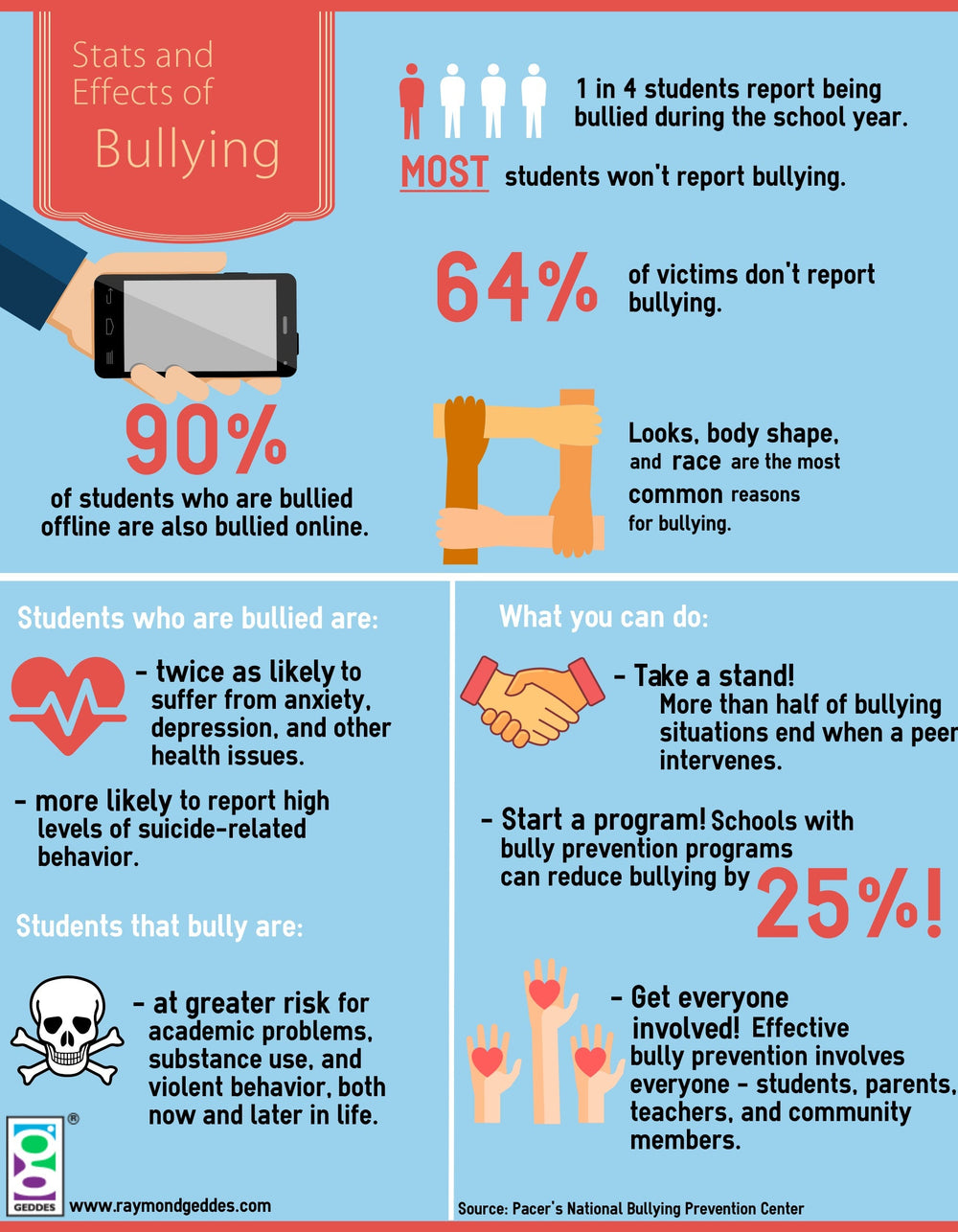
Stats and Effects of Bullying Infographic

Incorporating Bullying Prevention Strategies in Schools

Bullying Statistics & Numbers in 2024 Revealed
Learn The Types Of Bullying With Examples And How To Deal With A Bully.
Bullying Takes Various Forms, And There Are Steps Parents Can Take To Help Tackle The Problem In Schools.
The Behavior Is Often Repeated And.
Related Post: